Pages

Showing posts with label genreflecting. Show all posts

Sep 30, 2013

September Genreflecting: Review: Code Name Verity by Elizabeth Wein

Genreflecting wordle

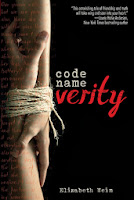
Code Name Verity cover
Oct. 11th, 1943-A British spy plane crashes in Nazi-occupied France. Its pilot and passenger are best friends. One of the girls has a chance at survival. The other has lost the game before it's barely begun.


When "Verity" is arrested by the Gestapo, she's sure she doesn't stand a chance. As a secret agent captured in enemy territory, she's living a spy's worst nightmare. Her Nazi interrogators give her a simple choice: reveal her mission or face a grisly execution.

As she intricately weaves her confession, Verity uncovers her past, how she became friends with the pilot Maddie, and why she left Maddie in the wrecked fuselage of their plane. On each new scrap of paper, Verity battles for her life, confronting her views on courage, failure and her desperate hope to make it home. But will trading her secrets be enough to save her from the enemy? 


From Goodreads


So this was a poor choice for this specific use. It's a PERFECT historical fiction representative, but I can't even begin to write a spoiler-free review at the moment because I'm still processing what just happened. Needless to say, I completely understand why this was one of the hottest books of 2012 & that summary above does the storyline justice. What it doesn't do justice for is Wein's writing. Her intricate writing style is impeccable & perfectly suited for this type of story. That's really all I feel I can say at the moment.

As for its historical fiction portrayal, this book was an exceptional example of what good historical fiction can accomplish. Maggie Stiefvater, a history buff who usually has trouble enjoying historical fiction books, adored this book. Check out her analytic & spoiler-free explanation on Goodreads.

While many people may not enjoy the wartime setting or the prisoner of war type books, Code Name Verity is so much more than that. It transcends pigeon-holing because it's not just about the time period or the events facing the characters; this book represents historical fiction's ability to appeal to all reader demographics because of it's meaning & presence. The story being told, about a true and meaningful friendship, is one that can exist in any time period. The uniqueness of this particular situation is what makes it so perfect for a historical fiction piece.

Not only is this book factual, it's also emotive. The locations & information are well-researched and the nationalities portrayed are quite accurate. What makes it work so well in this historical context is the ability to bring all these characters together & have them interact in their specific manners. I'm sure that's all a bit more muddled than I would prefer, but that's the best way I can think of to explain how unique this particular book is and why it was difficult to use as a historical fiction example.

I'll be cutting down my genreflecting posts to three a month due to my school & work load. I may combine the general & details posts or I may only review one book. My determination to finish this series is strong & I hope you'll bear with me during this transitional period.

Sep 20, 2013

September Genreflecting: Review: Lyddie by Katherine Paterson

Genreflecting wordle
Lyddie cover
When Lyddie and her younger brother are hired out as servants to help pay off their family farm's debts, Lyddie is determined to find a way to reunite her family once again. When Lyddie hears about the mill jobs in Lowell, Massachusetts, she heads there with the goal of earning enough money to reunite her family. 

Six days a week from dawn to dusk Lyddie and the other girls run weaving looms in the murky dust - and lint-filled factory. Lyddie learns to read - and to handle the menacing overseer. But when the working conditions begin to affect her friends' health, she has to make a choice. Will she speak up for better working conditions and risk her job - and her dream? Or will she stay quiet until it is perhaps too late?

From Goodreads

The industrial revolution in the United States was just as harsh on the population as in Europe. With constant in-fighting among all the companies & factory owners, the workers suffered heinously. Lyddie is no exception. 

When her father runs off in search of better fortunes for his family, leaving behind several young children [of which Lyddie is the eldest] and a mentally unstable wife, Lyddie steps in to manage the family's affairs. It's not long until her mother finally loses it and ships Lyddie and her younger brother off to work out the debts their father incurred while she prays for salvation with the two youngest children.

At first Lyddie dreams of returning to her family's farm & getting things back to the way they used to be. She holds on to the good memories she has while working her way towards a better future. Unfortunately the lights on her dreams are dimming with each bit of news she receives. Will she survive the tumultuous factory setting & thrive or will she just become another casualty in the war of progression?

Lyddie is an incredible read. While at times difficult to comprehend given the vernacular used, it still paints a realistic and accurate portrait of life in the industrializing era of United States history. Lyddie displays so much character & strength as she tries to do what's best for her family. What she sometimes forgets though is that she is still just a child herself and cannot solve every problem.

The setting & social issues represented in this book are spot on. From the Quaker family, to abolition, to hiring help, this book is an impeccable representation of a bygone time. While I do not wish to live it, the history that it represents is very important to the development of today's society. I find it incredibly fascinating that I can pinpoint to certain situations & scenarios that lead to particular events in history. This may be a small, rural area story, but that makes it even more vital to the history component. It shows that the situation was the same all over the place.

There wasn't a finalized resolution to the story & I think I prefer it that way because it allows me to dream up my own ending for Lyddie's life.

What are some of your favorite historical fiction books?

Sep 13, 2013

September Genreflecting: Historical Fiction: The Details

Genreflecting wordle

Based on the Collins English Dictionary, a subgenre is "a category that is a subdivision of a larger genre." (Source) Historical Fiction can be divided many different ways depending upon the reader's focus. There really is something for everyone in this genre.

Many people like to read books about specific time periods. Considering the length of man's written history, there are a multitude of options ranging from indigenous peoples in pre-colonization eras, the Industrial Revolution, the 1960s, & even wartime (which one, I'll let you decide). Each period has distinct characteristics that attract certain readers & allow them to more fully enjoy the plot. It can add a lot of texture and meaning to the story depending on the characters' actions in particular time periods.

Another way to divide this genre is by location. England in the 1850s would be completely different than the United States in the 1850s which would be even more different from the indigenous people of the Amazon Rain Forest during the 1850s. To quote The Doctor, "People assume that time is a strict progression of cause to effect, but *actually* from a non-linear, non-subjective viewpoint - it's more like a big ball of wibbly wobbly... time-y wimey... stuff." (IMDB) That's how I feel about how these events transpire. When we think of the timing of events, we tend to put things chronologically to organize them, even if they had/have no effect on one another. That's what I love about location-based historical fiction, it's like getting 2 books in one: another place and another time.

Ann Rinaldi has some great words about writing the fiction in historical fiction.

Where in your novels does the history end and the fiction begin?
" I will only invent in history when history doesn't provide information...only when I run into a brick wall in research." I include in my novels an Author's Note which clarifies verifiable fact from personal creation. I look at gaps in recorded history as a challenge and an opportunity to create character."

Have you ever received any backlash for your depiction of history?
"No. I recognize that there is a definite risk involved in creating a personality/childhood/feelings for a historical figure. However, one must take risks in life. I never contradict documented fact and always note what is my own invention."


Be sure to check back next Friday when I review Lyddie by Katherine Paterson.

Sep 9, 2013

September Genreflecting: Historical Fiction: The Basics

Genreflecting wordle

I wanted to do a reading challenge for the subject of Genreflecting, but I didn't get much feedback (maybe because it asked you to read 2 books for each genre and discuss them or because it's not really a "reading challenge" per se, but more an educational experiment), so I've turned it into a monthly feature! For each month of 2013, there will be a specific genre that will be analyzed. I'm planning to have author input and at least 2 reviews of books in the genre as well.

September's genre is Historical Fiction! These books, obviously, are set in the past and can vary from recent past (like the 1960s and 1970s) to several centuries ago (1700s). These kinds of books appeal to all manner of readers based on place, time period, & character backgrounds. It's a way to travel back in time to a personally unfamiliar (or favorite) era and experience someone else's life for a while. Equal parts entertaining & informative, these  books never cease to please a reader because of the amount of variety available. Some people prefer to read about certain eras or time periods, while others prefer certain places to be predominately featured. No matter what you're looking for, you're sure to find something to like. (adapted from the Teen Genreflecting, 2nd edition)

I enjoy a wide variety of historical fiction books ranging from:
I'm excited to say that I've chosen my two books, one older and one newer, to read for this challenge. The older book is Lyddie by Katherine Paterson (originally published in 1991) and I'll have a review and analysis up on Friday, September 20th. The newer book is Code Name Verity by Elizabeth Wein (originally published in 2012 [in the US]) and I'll have a review and analysis up on Friday, September 27th. I'll also be hosting a giveaway, so stay tuned!

Aug 30, 2013

August Genreflecting: Review: Secret Keeper by Mitali Perkins

Genreflecting wordle

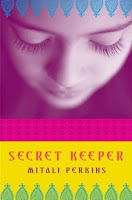
Secret Keeper coverWhen her father loses his job and leaves India to look for work in America, Asha Gupta, her older sister, Reet, and their mother must wait with Baba’s brother and his family, as well as their grandmother, in Calcutta. Uncle is welcoming, but in a country steeped in tradition, the three women must abide by his decisions. Asha knows this is temporary—just until Baba sends for them. But with scant savings and time passing, the tension builds: Ma, prone to spells of sadness, finds it hard to submit to her mother- and sister-in-law; Reet’s beauty attracts unwanted marriage proposals; and Asha's promise to take care of Ma and Reet leads to impulsive behavior. 
What follows is a firestorm of rebuke—and secrets revealed! Asha’s only solace is her rooftop hideaway, where she pours her heart out in her diary, and where she begins a clandestine friendship with Jay Sen, the boy next door. Asha can hardly believe that she, and not Reet, is the object of Jay’s attention. Then news arrives about Baba . . . and Asha must make a choice that will change their lives forever.

From Goodreads

Secret Keeper was unlike any other book I've read. Set in the tumultuous times of 1970's India, we follow the story Asha, her older sister Reet, and their mother as they adjust to life with their in-laws and without their father. Suffocating under the oppressive and strict rule of her Uncle, Aunt, & Grandmother, Asha escapes into her journal writing on the roof and by pushing boundaries. Not comfortable with giving up her liberty, Asha clings to the hope that the day that her father sends for his family will come soon.

Things don't go nearly as smoothly and Asha's patience begins to run out. With options dwindling by the day, she chooses to take matters into her own hands as much as possible. In a setting where her opinion is of little to no value and her place is decided for her, will she ever learn to fit in or will she have to fight for every little thing her father always wanted for her and their family?

I was completely blown away by this book! Every time I thought I knew what was going to happen next, I found myself shocked by what actually happened. It was in those moments that I realized that I had been conditioned to expect certain events to occur in my books. Which if they were set in modern day (or even historical) America, I might have been right. The cultural differences really made this book stand out to me. While some might write off Asha as weak or submissive, I think her actions in this book show great courage when viewed in context. 

There was so much more going on under the surface of this book. It was as if every action or event had a double meaning, the meaning for the story and the meaning for society. I think it was beautifully written with just enough contextual clues to give the reader an overview of the historical and cultural importance of events transpiring without bogging down the storyline. 

Most importantly, I think this book is a gateway book. I was so engrossed in it that it made me want to read more books like it. These can be the best way to meet new cultures and experience life in someone else's shoes. This book did an incredible job showcasing how teenagers in all societies are really the same because they struggle with themselves and their place no matter what situation they are in. I think I prefer this kind of book that follows someone within their own culture because I think it presents a more multi-dimensional presentation of the society without focusing on the differences between groups.

I hope you'll all take this long weekend (for those of us in the US celebrating Labor Day on Monday) to expand your reading horizons if you haven't done so recently. It's really worthwhile.

Aug 23, 2013

August Genreflecting: Review: Habibi by Naomi Shihab Nye

Genreflecting wordle

The day after Liyana got her first real kiss, her life changed forever. Not because of the kiss, but because it was the day her father announced that the family was moving from St. Louis all the way to Palestine. Though her father grew up there, Liyana knows very little about her family's Arab heritage. Her grandmother and the rest of her relatives who live in the West Bank are strangers, and speak a language she can't understand.

It isn't until she meets Omer that her homesickness fades. But Omer is Jewish, and their friendship is silently forbidden in this land. How can they make their families understand? And how can Liyana ever learn to call this place home?

From Goodreads

Liyana has a valid reason to feel like an outsider in so many ways. An Arab-American who grew up in the very modern & liberal United States is obviously going to have some adjustment issues when moving to a more rural & structured life in Palestine. There are so many expectations to be met and protocols to be followed in a world where your whole life can be in upheaval at any given time. What's most important is how each situation is handled. As she begins to navigate the slippery corridors of social interactions, Liyana begins to find herself and more importantly her position in her new world.

Considering this book's age (originally published in 1997) the story itself is still quite relevant for today's struggling teens. While some things have gotten better, and some worse, in the Palestine/Israel area, one thing remains the same: people must continue to live their lives. Time stops for no man & it certainly doesn't stop for children. This book gives us a small glimpse into a pretty typical experience for people who embark on the adventure of living in a foreign country or culture.

What really has an impact on the reader are the responses to certain situations. It's in those moments that we learn so much about the culture, story, & character(s). Watching Liyana spend time with her grandmother, with whom she can't communicate, is important because her grandmother is trying to impart their heritage onto her. With each passing scenario, we see Liyana wrestle not only with her feelings, but also with her desires. These little interactions really drive the narrative and help to focus the story on Liyana.

This book settles nicely into the subgenre based around one's own culture. While there are several represented in the book (Arab, Jewish, Armenian, and more) what we're really attuned to is Liyana's role within her own culture and how that impacts her interactions with the other groups. 

Be sure to come back next week when I host a giveaway & review Secret Keeper by Mitali Perkins!

Aug 16, 2013

August Genreflecting: Multicultural Fiction: The Details

Genreflecting wordle

Based on the Collins English Dictionary, a subgenre is "a category that is a subdivision of a larger genre." (Source) Multicultural Fiction is a fairly broad topic that tends to be all encompassing. Even so, there is still plenty of niche room available in this domain. You can choose to read about just one type of culture or you can choose to read about just one type of situation.

As I pointed out in The Basics post, there are two main types of books in this genre. The first follows a character within their own culture. They could be struggling to come to terms with certain aspects of their heritage, opening resisting their culture, or simply engaging in traditional rites of passage. These types of books can go any number of ways, but for the most part they focus on just one experience.

The other types of books in this genre involve some sort of clash. This could manifest itself in the shape of gang violence, interracial relations, or all out war. Any manner of encounter between two differing cultural groups gives these books their story. Personally these are the books that I tend to find myself reading more often because I like books to be driven more by events involving several characters rather than focusing on just one person's experience.

Now, with all that being said, there is a third type that many might not consider officially "multicultural." I believe that if a core character of the story represents any type of minority group that the book should be considered multicultural. In all honesty I believe this simply because we are never able to turn our backs on our heritage. It will always play a role in how we interpret & react to the situations that arise.

I think these excerpts from interviews with Jacqueline Woodson & Tanuja Desai Hidier really highlight what I've been trying to explain about Multicultural Fiction & why it deserves to be its own genre.

TEACHINGBOOKS: Can you share part of what you’re striving for in your writing?

JACQUELINE WOODSON: I write realistic fiction because I want to put onto the page people who I didn’t get to see in books when I was growing up. A lot of the books I read did not have some part of who Jacqueline Woodson was in them. There weren’t a lot of books at the time about growing up in Brooklyn or about African-American girls. I never read a book where there was a deaf kid, or where there was a single mom and a grandmother making up a family.

I was growing up in a rich culture where all different people are living around me, having 
different experiences — this was the real world to me. So to go to read books sometimes and not see myself in the pages made me think, “Well, where am I?” and by extension, “Who am I?” It made me start writing about the things that really mattered to me.


Tanuja wanted to tell her desi (term for the people, cultures, and products of the Indian subcontinent or South Asia and, increasingly, to their diaspora) story to the world in her short stories -  Desilicious anthology. "... Born Confused was my way of writing about how positive it is to have desi heroes and heroines from the diaspora. I wanted to shape a period of cultural confusion and cultural exhilaration. I wanted to find out - What does it mean to be Indian? To be South Asian? To be American? And at the heart of that: To be yourself? I also wanted to redefine the C in ABCD - the term 'American Born Confused Desi' - because there certainly are people who are unsure about their cultural identity."

From her blog [definition from en.wikipedia.org/wiki/Desi]

I hope this was education but fun! Be sure to check back next week when I review Habibi by Naomi Shihab Nye.

Aug 9, 2013

August Genreflecting: Multicultural Fiction: The Basics

Genreflecting wordle

I wanted to do a reading challenge for the subject of Genreflecting, but I didn't get much feedback (maybe because it asked you to read 2 books for each genre and discuss them or because it's not really a "reading challenge" per se, but more an educational experiment), so I've turned it into a monthly feature! For each month of 2013, there will be a specific genre that will be analyzed. I'm planning to have author input and at least 2 reviews of books in the genre as well.

August's genre is Multicultural Fiction! These books are part of a growing trend that stemmed from readers. In our increasingly globalized world, people want to read more about other people's lives and how they differ from their own. In the same token, people want to read books about others like themselves that they can relate to in a cultural/geographical sense. While many would argue that this doesn't constitute a genre, more a theme, I think that any book that has someone from another culture (other than the majority represented in the story) in a central role can fall under this category. 

There is no one, true definition of Multicultural Fiction, but there are two main types. The first follows the lives of characters within their own culture (whether they struggle with it or just exist) and the second follows a cultural clash between two or more "opposing" groups. Most importantly though is the underlying theme of similarity. Young adults often turn to books to see and find themselves. These books allow that on a broader scale. (paraphrased from Teen Genreflecting, 2003)

A few of my favorite authors you may recognize in this genre are:
  • Sharon M. Draper- Romiette & Julio
  • Jacqueline Woodson- The House You Pass on the Way
  • Walter Dean Myers- Fallen Angels
  • Tanuja Desai Hidier- Born Confused
  • Alice Mead- Girl of Kosovo
  • Amy Tan- The Joy Luck Club (not YA, but still acceptable)
  • Tell me some of your favorite books!
I'm excited to say that I've chosen my two books, one older and one newer, to read for this challenge. The older book is Habibi by Naomi Shihab Nye (originally published in 1997) and I'll have a review and analysis up on Friday, August 23rd. The newer book is Secret Keeper by Miltali Perkins (originally published in 2008) and I'll have a review and analysis up on Friday, August 30th. I'll also be hosting a giveaway, so stay tuned!

Jul 27, 2013

July Genreflecting: Giveaway: Solid by Shelley Workinger & Review: The Program by Suzanne Young

Genreflecting wordle

I apologize that this is posting late. I goofed when setting the scheduler. :) Enjoy!

The Program coverIn Sloane’s world, true feelings are forbidden, teen suicide is an epidemic, and the only solution is The Program.

Sloane knows better than to cry in front of anyone. With suicide now an international epidemic, one outburst could land her in The Program, the only proven course of treatment. Sloane’s parents have already lost one child; Sloane knows they’ll do anything to keep her alive. She also knows that everyone who’s been through The Program returns as a blank slate. Because their depression is gone—but so are their memories.

Under constant surveillance at home and at school, Sloane puts on a brave face and keeps her feelings buried as deep as she can. The only person Sloane can be herself with is James. He’s promised to keep them both safe and out of treatment, and Sloane knows their love is strong enough to withstand anything. But despite the promises they made to each other, it’s getting harder to hide the truth. They are both growing weaker. Depression is setting in. And The Program is coming for them.

From Goodreads


Depression & suicide are very common among teenagers. The tough transitional years seem to have a magnified effect on this population in particular; so much so that a few select states are piloting The Program to combat this terrible affliction. If teens begin exhibiting signs of depression, they can be whisked off to the secluded facility that will assist in their recovery. After a few weeks they can be reintegrated into society with a totally new outlook on life.

Sloane & her group have had a tough few months. It all started when her brother Brady committed suicide. Soon after that others started to be put in The Program. Unfortunately, they person that came out on the other side was barely even a shell of the person they were before treatment. With things crumbling all around her, Sloane wonders if she & boyfriend James can really hold it together. They just have to make it to age 18 & they'll be free. But life isn't very kind and Sloane finds herself fighting her family & friends for her love & her life.

This was an incredible book! Seriously, I don't think I've enjoyed a science-fiction book this much in a while. The story was riveting because you really had no idea what to expect next. There were so many possibilities & so much potential for things to change in a heartbeat that I was constantly on the edge of my seat. 

What stood out the most for me though was the timing of this book. Normally when you enter a story it's either before or after what we consider the "rising action," being the event or person who catapults the story forward. In The Program I felt like we were walking into the middle of the story, but in a good way. We didn't have to read through the uptick in teen suicide & The Program also isn't fully operational. This book is set in the testing phase & is catching on, so this is long before anyone can really analyze the outcomes of The Program. 

Sloane & James are broken people, but in an understandable way. Since any sign of emotion can be grounds for admission for depression, there is no safe outlet. Even sports have been taken away in case the competition was too much to handle. All these things are still being sorted out, so watching teens struggle with their new existence is very moving and relateable.

As a science fiction book it held true to the science portion. We get to see the inner workings of parts of The Program that are based in the neurological control of its victims. This is chemical brainwashing for the betterment of society. I could see this being the stepping stone for a society that eventually tries to control all emotions. It could relate to any number of other books or movies where the governing entity tries to control the responses of the population "for their own safety."

Even better are the "what if" scenarios that dance around in your mind. Would we really do this to our own teenagers? How can Sloane make it out of this situation? Is there any hope of survival? The moral compass is spinning out of control in this book & there is little hope of getting it back on track. Luckily this was the first in a series, so we'll see where the story goes in the next installment.

On to the fun part! This week I'm giving away a copy of Solid by Shelley Workinger. Remember that you must be at least 13 years old & have a US mailing address in order to enter. The giveaway will close on Friday, August 2. Good luck!
a Rafflecopter giveaway

Jul 19, 2013

July Genreflecting: Review: The Hitchhiker's Guide to the Galaxy by Douglas Adams

Genreflecting wordle

Hitchhiker's Guide to the Galaxy coverSeconds before the Earth is demolished to make way for a galactic freeway, Arthur Dent is plucked off the planet by his friend Ford Prefect, a researcher for the revised edition of The Hitchhiker's Guide to the Galaxy who, for the last fifteen years, has been posing as an out-of-work actor.

Together this dynamic pair begin a journey through space aided by quotes from The Hitchhiker's Guide ("A towel is about the most massively useful thing an interstellar hitchhiker can have") and a galaxy-full of fellow travelers: Zaphod Beeblebrox--the two-headed, three-armed ex-hippie and totally out-to-lunch president of the galaxy; Trillian, Zaphod's girlfriend (formally Tricia McMillan), whom Arthur tried to pick up at a cocktail party once upon a time zone; Marvin, a paranoid, brilliant, and chronically depressed robot; Veet Voojagig, a former graduate student who is obsessed with the disappearance of all the ballpoint pens he bought over the years.


From Goodreads

The Hitchhiker's Guide to the Galaxy  is one of the most popular humorous science-fiction books ever written. First published in 1979, it has been read by several generations and has remained extremely well-spoken of. Personally, it wasn't all that for me. I enjoyed the jokes I knew were coming & Adams has a unique storytelling ability, but it was a jaunty, jumbled mess as far as I'm concerned. The cast was quirky and fun in ways that I hadn't really expected, but it was a bit wacky. I think that's part of the allure for so many people. The sheer absurdity and outlandishness of the stories is quite enticing.

It follows the adventures of Arthur Dent & Ford Prefect as they hitchhike across the galaxy. Ford, being the alien updating the Guide, got stuck on Earth for 15 years and right as it's getting ready to be demolished, he grabs his mate Arthur and continues on his merry journey. They meet all sorts of aliens, see several planets, and enjoy the shenanigans of other travelers just as weird as themselves. Their antics land them in all manner of troubles, but they always seem to come out for the better on the other side. Personally, I adored Marvin! He's the opposite of what you think of when you think robot and his rapier wit allow for some memorable lines.

It's rather obvious why this one falls under science fiction. Between the inter-galactic travel, robots, & aliens, there are so many check marks on the list that it couldn't possibly go anywhere else. The part that really cements this book's place in science fiction though are the moral dilemmas and explanations throughout. As we meet countless races of non-humanoid life, we are constantly informed of their natures and thought processes. It's not simply a matter of knowing what they're doing, it's also the analyzing of why they do certain things. It makes all the difference in the world understanding someone's intent and background. Also, the scientific possibilities of all the artifacts and mechanics seen within the book allow the reader to imagine that some great things are possible.

Have you read this book or others in the series? What do you think about it? Be sure to check back next week when I giveaway a science fiction book and review The Program by Suzanne Young.

Here is the trailer for the movie version, which I find easier to follow and actually quite close to the book. If you haven't seen it, you should!

Jul 12, 2013

July Genreflecting: Science-Fiction: The Details

Genreflecting wordle

Based on the Collins English Dictionary, a subgenre is "a category that is a subdivision of a larger genre." (Source) Science-fiction probably has the largest collection of subgenres that, honestly, I didn't even consider under science-fiction. My brain has always been stuck in the aliens and technology vein, but there is a lot more to science-fiction than just that. What's really important in science-fiction is "their appreciation of the moral and philosophical implications of either the created world or the characters' roles in that world. These books also tend to stretch the imagination and scientific merit of the elements of the story." That being said there are several common subgenres that we can explore. I tend to read on a few of these and I'm pretty sure that my longtime readers can pick them out easily. :)

  • Adventure: These books are usually action-packed and involve some sort of campaign against an opposing force. The main character is oftentimes the hero and almost always our narrator. Probably the most famous series in this subgenre is the Ender series by Orson Scott Card.
  • Hard science-fiction: These books are what always pop into my mind when I hear science-fiction because science and technology are the focal points. The actual subject matter can vary from genetic engineering to space exploration to cyborgs. While normally you can suspend your imagination with science-fiction books, this specific type is given better credibility and readability if they are believable.
  • Humorous: As implied by the name, these books have an element of levity that drives laughter. Whether it's due to strange characters, unique situations, or satire, these books are very entertaining. Obviously the Hitchhiker's series by Douglas Adams is a popular favorite.
  • Aliens/supernatural powers: While these don't necessarily go hand in hand, I figured since they both dealt with the "other" that they could be easily combined. Aliens in science-fiction allow for a plethora of interpretation. They can be hostile or docile and they can be invaders or the invaded. Either way, there is ample room for exploration. Supernatural powers can also be very open as they can be engineered or accidentally triggered or simply be a normal part of the book's population. Lots of room to go any multiple directions.
  • Utopia/dystopia/post-apocalyptic: Imagine paradise. Now imagine what happens with paradise doesn't go as planned. Now imagine what happens when the world as you know it ceases to function or exist. There you have the beginnings of these three types of  books. They kind of all go together because it doesn't necessarily matter when they take place, what matters is how the people in the book cope with what they are facing or trying to create. These books have seen a huge uptick in numbers since the explosive popularity of The Hunger Games trilogy by Suzanne Collins.
There are just as many themes that emerge in these subgenres, but I don't think they can stand on their own without the support from one of these aforementioned groupings. What I love most about these types of books is their open availability to be transferred to film. Now, before you start yelling at your screens or throwing rotten tomatoes, understand this: I try to keep my book-based understanding and my movie-viewing experiences separate. Too many times have I had one or the other ruined for me because of how the other treated it. Now I simply enjoy (or enjoy mocking) each one respectively, but 9/10 times I will read the book over seeing the movie. Check out this list of upcoming book to movie adaptations!

The Hunger Games: Catching Fire (#2) November 22, 2013
Ender's Game November 1, 2013
The Maze Runner February 14, 2014
Divergent March 21, 2014

And those are just the ones we know of so far! Give me a shout out in the comments if you know of more!

Be sure to check back next week when I review the classic The Hitchhiker's Guide to the Galaxy by Douglas Adams.

Jul 5, 2013

July Genreflecting: Science-Fiction: The Basics

Genreflecting wordle

I wanted to do a reading challenge for the subject of Genreflecting, but I didn't get much feedback (maybe because it asked you to read 2 books for each genre and discuss them or because it's not really a "reading challenge" per se, but more an educational experiment), so I've turned it into a monthly feature! For each month of 2013, there will be a specific genre that will be analyzed. I'm planning to have author input and at least 2 reviews of books in the genre as well.

July's genre is Science-Fiction! This books oftentimes are housed with the Fantasy books because there is can be disagreements on which book belongs where. Most Science-Fiction books tend to look at the "what if" scenarios and are heavily influenced by scientific knowledge. The subject matter can range anywhere from time travel to aliens to dystopic futures. What tends to bind these stories together is their appreciation of the moral and philosophical implications of either the created world or the characters' roles in that world. These books also tend to stretch the imagination and scientific merit of the elements of the story. Plausibility is not a requirement and the farther stretching, sometimes the better the story. There are several subgenres depending on your preferred scenario so be sure to check back next week for the details post. (paraphrased from Teen Genreflecting, 2003)

A few of my favorite authors you may recognize in this genre are:
I'm excited to say that I've chosen my two books, one older and one newer, to read for this challenge. The older book is Hitchhiker's Guide to the Galaxy by Douglas Adams (originally published in 1979) and I'll have a review and analysis up on Friday, July 19th. The newer book is The Program by Suzanne Young (originally published in 2013) and I'll have a review and analysis up on Friday, July 26th. I'll also be hosting a giveaway, so stay tuned!

Jul 1, 2013

June Genreflecting: Giveaway of Mistwood by Leah Cypress & Review of Graceling by Kristin Cashore

Genreflecting wordle
I'm sorry this didn't go up on Friday like it was supposed to. Unfortunately instead of finishing up the post on Thursday night I was rushing to the vet and we had to make the extremely painful decision to put our kitten Hugo down. We were in shock & are grieving, but I managed to pull this together for you for today. Enjoy.
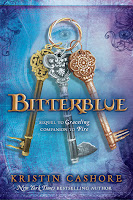
Bitterblue cover
Eight years after Graceling, Bitterblue is now queen of Monsea. But the influence of her father, a violent psychopath with mind-altering abilities, lives on. Her advisors, who have run things since Leck died, believe in a forward-thinking plan: Pardon all who committed terrible acts under Leck's reign, and forget anything bad ever happened. But when Bitterblue begins sneaking outside the castle--disguised and alone--to walk the streets of her own city, she starts realizing that the kingdom has been under the thirty-five-year spell of a madman, and the only way to move forward is to revisit the past.

Two thieves, who only steal what has already been stolen, change her life forever. They hold a key to the truth of Leck's reign. And one of them, with an extreme skill called a Grace that he hasn't yet identified, holds a key to her heart.

From Goodreads

Bitterblue wasn't nearly as spellbinding for me as the first two books in the Graceling Realms "series". I enjoyed the characters & some of the action, but felt that things dragged on a bit as the story progressed. While following Bitterblue as she traveled her kingdom & adventured with Katsa & Po was quite entertaining, the second half of the book was more depressing than I was prepared for. Suffice it to say that this was not one of my favorite works by Kristin Cashore.

As far as a fantasy book goes, it hits the mark right on. Between the magical realm, the unique "Graces," and the adventuring, we've got a prime example of an epic fantasy. The battle between Bitterblue's graceful reign & her tyrannical father's oppression is about as truthful a good vs. evil situation as you can get in this world. While they aren't on a specific quest together per se, there is a large group of characters that all kind of lend themselves to being grouped into smaller clusters. While I may not have been the biggest fan of this book, I do have to respect it for what it is in the genre.

Now for what I'm sure y'all are really interested in: the giveaway! In keeping with the fantasy theme I'm giving away Leah Cypress's Mistwood. You know the rules: you must be over 13 & live in the US (or at least have a US mailing address).
a Rafflecopter giveaway

Jun 21, 2013

June Genreflecting: Review: Briar Rose by Jane Yolen

Genreflecting wordle
Briar Rose coverEver since she was a child, Rebecca has been enchanted by her grandmother Gemma's stories about Briar Rose. But a promise Rebecca makes to her dying grandmother will lead her on a remarkable journey to uncover the truth of Gemma's astonishing claim: I am Briar Rose. A journey that will lead her to unspeakable brutality and horror. But also to redemption and hope.

From Goodreads

What grandmother doesn't tell fairy tales to her grandchildren? Gemma is a natural storyteller, but she only ever tells the same story, the exact same way every time. Briar Rose, or as most people know her Sleeping Beauty, is a familiar tale about love, loss, and rallying your strength after the loss. For Rebecca's whole life she's heard Gemma tell the tale. She's heard it so much that she even knows it by heart, including the part where Gemma swears she is the girl in the tale. Rebecca makes the promise to discover the truth behind the story to her dying grandmother. The adventure that ensues is one that no one could have foreseen.

Told in alternating chapters of present day situations and Gemma's version of the fairy tale, Briar Rose is sorrowful, but important book about survivors. Being the descendants of Polish Jews, you can't expect that everyone made it out of the Holocaust alive, but the truth is even more shocking than that. Since we don't know the grandmother's version of the fairy tale from the beginning, we learn it as we move through the story so that we can piece the whole puzzle together.

Expertly researching and written, this book is a testament to Holocaust fiction. It was a unique twist on an otherwise dark story. That's not to say there aren't some dark portions to the tale, but it was considerably less than I was expecting with something of this nature. What really drew me in was the hidden truth. There are so many clues and so many directions they point in that even the characters are overwhelmed, but they are fairly easily navigated & accounted for until the complete truth is clear. 

As for the fantasy element, this was no where near a normal fantasy. It falls under the fairy tale retelling section, but just barely. The whole premise is based around the Briar Rose story and while true life does mirror the fairy tale, it takes until the end of the story for us to really see that. Normally in retellings you get the sense of deja vu or something that automatically reminds you of the original tale. That being said, it still counts and is a special version of a retelling. You can't go into it thinking you're going to get a regular story, but what you get is so much more.

Be sure to come back next Friday when I review Bitterblue by Kristin Cashore and host a giveaway!

Jun 14, 2013

June Genreflecting: Fantasy: The Details

Genreflecting wordle

Based on the Collins English Dictionary, a subgenre is "a category that is a subdivision of a larger genre." (Source) In the case of Fantasy, we have several subgenres that are quite commonplace. They range in setting from distant past, distant future, to alternate present reality and most commonly deal with a coming-of-age scenario for our protagonist. Here are some of the most popular selections:
  • Epic fantasy- Sword fights between good and evil set in a magical land..sound familiar? This is the kind of book most people think of when they hear the word "fantasy." It encompasses the likes of Tamora Pierce, J.R.R. Tolkien, and my personal favorite Kristin Cashore. This kind of writing lends itself to many different types of readers whether they prefer group adventures or solo expeditions and magic or braun. Whether you want a long series or a simple read through, this subgenre has something for everyone.
  • Faerie- While I believe this one to be self-explanatory, some folks often times confuse faeries with fairy tales. The latter is dealt with in connection with myths and legends so as not to confuse readers. Faerie books deal with the creatures themselves, sprites, nymphs, elves, gnomes, etc. These creatures are all different species of magical beings that can work their charms on, oftentimes to the detriment of, humans. Holly Black, Eoin Colfer, and Melissa Marr are very popular faeries writers in YA. They offer a nice balance between real world and alternate realm settings allowing for diversity in faerie rules.
  • Mythic reality- Much like the "urban fantasy" subgenre of paranormal books, mythic reality takes place in the real world. Fantastical creatures and events take place in an otherwise mundane setting allowing the reader to believe in magic all around them. These books oftentimes lend themselves very well to a movie crossover as witnessed by Cassandra Clare's Mortal Instruments series & Kami Garcia and Margaret Stohl's Beautiful Creatures
  • Myths, legends, and fairy tales- Personally, these are the kinds of books I think of when I hear "fantasy." My go-to thoughts are of Arthurian legends and the original Grimm's fairy tales. I'm not the biggest fan of epic fantasies or the popular faerie books. I prefer my magic ensconced in these realms. Retellings of popular stories are "in" right now, but there is also a long history of complete reworkings. Some great examples are Jackson Pearce's retellings and Stacey Jay's reworkings. In general though you can find plenty of variety from the likes of Gerald Morris, Francesca Lia Block, and Donna Jo Napoli.
I truly adore getting into writer's heads when it comes to building these worlds. There are so many options and details to think about that I get overwhelmed just contemplating it. Kristin Cashore did an amazing job in an interview with Amazon a few years back detailing how she built the seven kingdom's world. I was kind of shocked at what I perceived to be the backward nature of this process, but in fact it makes tons of sense.


Amazon.com: At what point did the world of the seven kingdoms emerge, and how did it evolve and affect the arc of the story?
KC: I went back to my book plan for this question, too, and was kind of amused to discover that the seven kingdoms emerged very specifically from the opening scene I wanted to use for the book. I wanted the book to begin with Katsa sneaking at midnight through the court of a kingdom other than her own, rescuing a stranger who’d been kidnapped from a strange land. This gave me at least three kingdoms just to start with: Katsa’s, the stranger’s strange land, and the kingdom of the kidnappers. So, from the beginning, I had a sense of a big world, and as I hammered out the plot, that world kept growing. I realized that it worked for there to be a number of kingdoms, most of which were badly run—it fit in with Katsa’s desire to sneak around from kingdom to kingdom doling out undercover justice. It also made the mystery I was building more mysterious—if there are seven kings, it takes longer for your protagonist to figure out who’s responsible for mysterious goings on.
I fleshed out the details of my world as I went along, and that includes its dramatic landscapes and weather, which turned out to be really fun tools for making my characters miserable

I hope this was informative. Fantasy is such a broad subject that it really helped me find my reading niche when I starting exploring the subgenres. That doesn't mean I don't try things anyway, but it's always good to know what you like from the start. Which one(s) do you prefer? What influential writers am I missing from those very abbreviated lists? Be sure to check back next week for my review of an old fantasy book Briar Rose by Jane Yolen.